

Like other Canadian bank currencies—RBC Avion, Scene+, Amex Membership Rewards, and National Bank À la carte Rewards—CIBC’s Aventura Rewards is a distinctive bank-points program.
Aventura does not rely on complicated airline transfers or hotel-point redemptions. Its straightforward use is booking a normally priced cash ticket with points. It also has an Airline Rewards Chart, which can produce more than 1 cent per point when cash fares are high.
Aventura is a CIBC travel currency with a roughly 1 cent-per-point baseline and the potential for higher value through its Airline Rewards Chart.
CIBC Aventura Rewards
Aventura Rewards is CIBC’s proprietary credit-card points system and is not tied to one airline. Cardholders can earn Aventura points and use them for flights, hotels, car rentals, gift cards, merchandise, statement credits, TFSA and RRSP contributions, and other financial products. Depending on the redemption, value is roughly 1 to 2.2 cents per point.
CIBC Aventura credit cards
The lineup includes cards at several tiers:
🇨🇦 CIBC Aventura Visa Infinite Card: best-ever 60,000 points
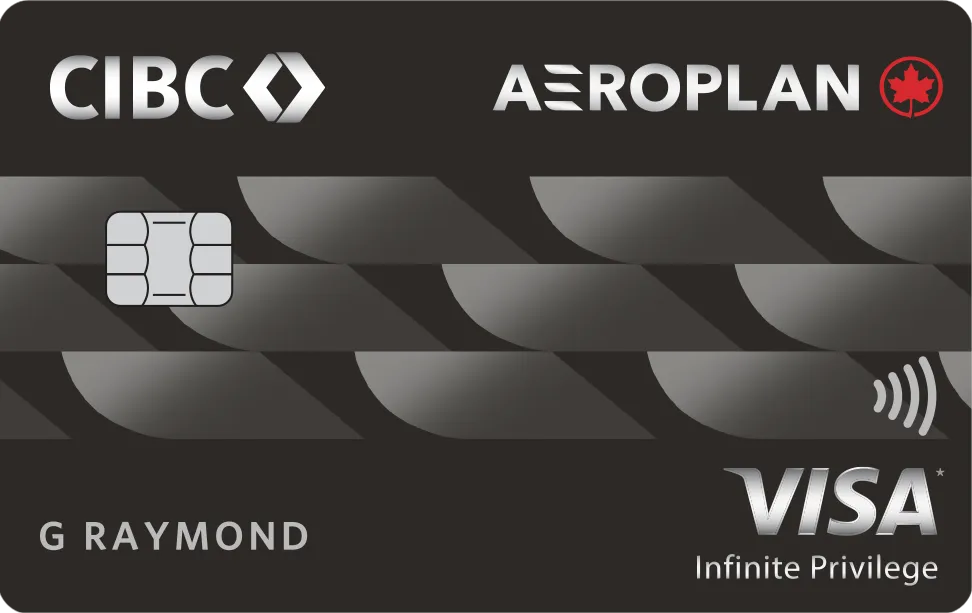
🇨🇦 CIBC Aventura Visa Infinite Privilege Card
🇨🇦 CIBC Aventura Gold Visa Card: best-ever 60,000 points
🇨🇦 CIBC Aventura Visa Card for Students
🇨🇦 CIBC U.S. Dollar Aventura Gold Visa Card
As long as you hold an eligible card, Aventura points do not expire. After closing the card, you have 60 days to deal with the points.
For most readers, the common options are the Aventura Visa Infinite and Aventura Gold Visa. The Visa Infinite has a $139 annual fee, minimum income of $60,000 personal or $100,000 household income, and some current application channels offer a first-year fee rebate. The premium Aventura Visa Infinite Privilege requires $150,000 personal or $200,000 household income and offers higher earn rates, lounge visits, an annual travel credit, and an exclusive business-class Airline Rewards Chart.
How to earn Aventura points
2.1 Credit-card welcome bonuses
Everyday spending is a slow way to build an Aventura balance. The most effective approach is usually applying when a card has a strong welcome offer and meeting the requirements without overspending.
2.2 Everyday card spending
Different Aventura cards have different multipliers:
| Card | CIBC Rewards travel | Selected categories | Other spending |
|---|---|---|---|
| Aventura Visa Infinite Privilege | 3x | 2x | 1.25x |
| Aventura Visa Infinite | 2x | 1.5x | 1x |
| Aventura Gold Visa | 2x | 1.5x | 1x |
| Aventura Visa | 1x | 1x | 0.5x |
| Aventura Visa for Students | 1x | 1x | 0.5x |
| Aventura Visa for Business | 2x | 1.5x | 1x |
| Aventura Visa for Business Plus | 2x | 1.5x | 1x |
The selected categories are:
- Visa Infinite Privilege: groceries, dining, gas, EV charging, transportation, and entertainment earn 2x.
- Visa Infinite and Gold Visa: gas, EV charging, groceries, and drug stores earn 1.5x.
- Visa and Student: gas, EV charging, groceries, and drug stores earn 1x; other spending earns 1 point per $2, or 0.5x.
- Business and Business Plus: gas, EV charging, eligible travel, transportation, and other transportation services earn 1.5x.
For business cards, travel and transportation can include airlines, hotels, car rentals, travel agencies, cruise lines, tour buses, local commuter transportation, ferries, railways, limousines and taxis, parking, tolls, and truck rentals.
How to use Aventura points
The redemption method determines the value. The baseline is about 1 cent per point, or 100 points for $1 CAD.
3.1 Airline Rewards Chart — the main opportunity
CIBC’s Aventura Airline Rewards Chart is the most important feature for serious users. Current economy-class bands are:
| Round-trip region | Aventura points | Maximum fare | Theoretical maximum value |
|---|---|---|---|
| Short-haul Canada/U.S. | 10,000–20,000 | $400 | 2.0–4.0 cpp |
| Long-haul Canada/U.S. | 25,000–35,000 | $800 | 2.29 cpp |
| Mexico, Alaska, Hawaii, Central America, Caribbean | 40,000–60,000 | $1,000 | 1.7 cpp |
| Europe | 50,000–70,000 | $1,300 | 1.85 cpp |
| Asia, Africa, Australia, Middle East, South America, and others | 75,000–125,000 | $2,000 | 1.6 cpp |
CIBC says that the lowest points band depends on the ticket price set by the airline. Not every origin, destination, and date will have the lowest price. The second row should therefore be understood as: tickets in this region require 25,000–35,000 points and can cover up to $800 of fare value.
Aventura is not a fixed-rate chart. It is more accurately a regional chart linked to the cash fare. Compare the cash price, the Aventura points required, and the price of an airline award before deciding.
Aventura is particularly useful for:
- Last-minute domestic travel in Canada
- U.S. flights
- High cash fares during holidays
- Dates when Aeroplan has no suitable award seat
- Airlines outside Star Alliance
- Travellers who do not want to study complex award charts
Aventura does not depend on an airline’s award inventory. It is closer to using bank points to buy a normally sold cash ticket, without restricting you to one airline. Points + Cash is available when you have at least 80% of the required points, and taxes can also be paid with points.
3.2 Business-class Airline Rewards Chart — VIP only
The premium CIBC Aventura Visa Infinite Privilege has a separate business-class chart:
| Round-trip region | Aventura points | Maximum fare |
|---|---|---|
| Short-haul Canada/U.S. | 40,000 | $1,000 |
| Long-haul Canada/U.S. | 70,000 | $1,750 |
| Mexico, Alaska, Hawaii, Central America, Caribbean | 80,000 | $2,000 |
| Europe | 150,000 | $3,000 |
| Asia, Africa, Australia, Middle East, South America, and others | 250,000 | $5,000 |
3.3 Flexible Travel Rewards
Book flights, hotels, car rentals, and cruises through the CIBC Rewards Centre or CIBC by Expedia, then apply points at 1 point = 1 cent.
3.4 Shopping with Points
This is flexible, but the value is weaker at roughly 0.7 cents per point.
3.5 Statement credits — not recommended
The rate is 4,000 points = $25, or only 0.625 cents per point.
3.6 Investments and mortgage payments
Points can be used at 12,000 points = $100, or about 0.83 cents per point, for CIBC financial products including residential mortgages, TFSA, RRSP, CIBC Investor’s Edge, and CIBC personal loans.
3.7 Gift cards and merchandise
The final value is clearly below 1 cent per point.
Which redemption is best?
- Airline Rewards Chart: first choice, especially when cash fares are high and the calculated value is clearly above 1 cpp.
- Flexible Travel: the simple fallback when the chart does not offer a good redemption; it provides at least the 1 cpp baseline.
- Shopping with Points promotions: occasionally useful when CIBC runs a bonus-redemption promotion, because the normal rate changes.
Aventura vs. Aeroplan
CIBC issues both Aeroplan and Aventura cards, but the programs follow different logic:
| Aventura | Aeroplan | |
|---|---|---|
| Type | CIBC bank points | Airline loyalty points |
| Airline alliance | Not tied to one alliance | Air Canada / Star Alliance ecosystem |
| Transfer partners | Generally none | The program itself is an airline currency |
| Award inventory | Not the main concept | Very important |
| Cash-fare redemption | Strength | Not the core use |
| Ease of use | Easy | More complex |
| Premium-cabin upside | Limited | Strong |
| Airline chart | ✓ | Aeroplan’s own award system |
Aeroplan suits someone who wants to use as few points as possible for a high-value business-class flight. Aventura suits someone who needs to buy a specific cash ticket and wants to reduce the actual cost.
4.1 Pros and cons
Strengths:
- Easy to use without studying airline alliances.
- No traditional award-seat availability problem: if a normal cash ticket is for sale, it may be bookable with Aventura.
- The Airline Rewards Chart creates arbitrage opportunities when cash fares are expensive.
- Travel redemptions provide a useful baseline value.
- Points do not expire automatically while the account remains open and in good standing.
Weaknesses:
- No major airline or hotel transfer partners, unlike Amex Membership Rewards and RBC Avion. You cannot turn Aventura into Aeroplan and then into an ANA business-class award.
- Everyday earn rates are only average.
- Most Aventura cards are not strong no-foreign-transaction-fee cards.
4.2 Who is Aventura for?
Aventura is a good fit for people who:
- Frequently travel within Canada, especially on routes such as Vancouver–Toronto or Toronto–Calgary when cash fares are high
- Do not want to study award tickets
- Need a backup when Aeroplan has no award seat
- Can make good use of a welcome bonus
Bottom line
CIBC Aventura is not Canada’s highest-upside travel currency. If your goal is an international business- or first-class award, focus on Aeroplan, Avion, or Amex Membership Rewards.
Aventura has a clear role:
It is simple and flexible, centres on cash-travel redemptions, and still offers a chance to improve flight value through the Airline Rewards Chart.

Comments
Comments from a new email are reviewed before they appear.