

More bad news for frequent flyers: the very useful Air Canada Aeroplan program will start using a new award chart on June 1, 2026. On the routes we care about most — North America–Asia-Pacific and Europe–Asia-Pacific — Aeroplan is devaluing meaningfully. That continues to underline two points:
-
- Don’t hoard miles or points. The miles you can actually redeem are the ones that matter
-
- Book award tickets before the new chart takes effect when you can
Below we compare the old and new charts before and after June 1, but only for partner airline award pricing — Air Canada itself is likely dynamic, so those figures are less useful as a fixed reference. ⚠️ Notes:
-
- The number in parentheses in the top-left of each cell is the mileage shown on the old chart
-
- Red means the new chart requires fewer miles; blue means the new chart requires more miles
-
- Air Canada includes Air Canada Rouge, Air Canada Express and connections with The Landline Company
-
- Select Partners include United Airlines, Emirates, Flydubai, Etihad Airways, Canadian North, Calm Air, Bearskin Airlines and Provincial Airlines Ltd (PAL).
Air Canada divides the world into four regions
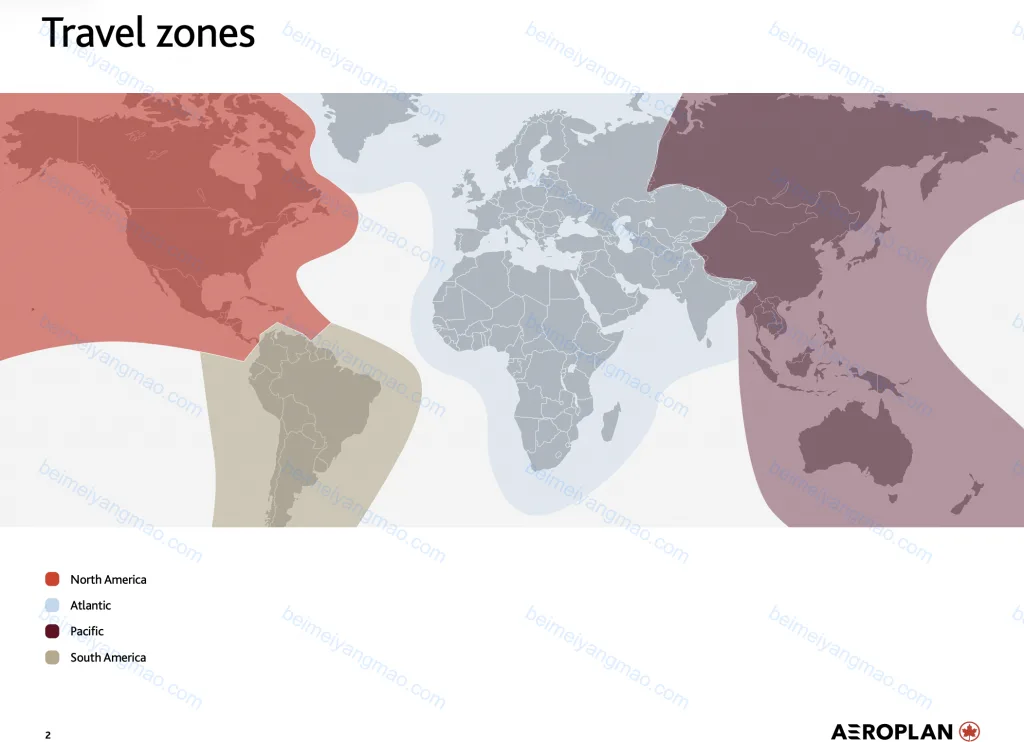
The four regions are North America, South America, the Pacific (North Asia, East Asia, Southeast Asia, Oceania), and the Atlantic (Europe, Africa, Central Asia, West Asia, South Asia). There are 10 award charts in total (4 within regions + 6 between regions).
Within North America: no change
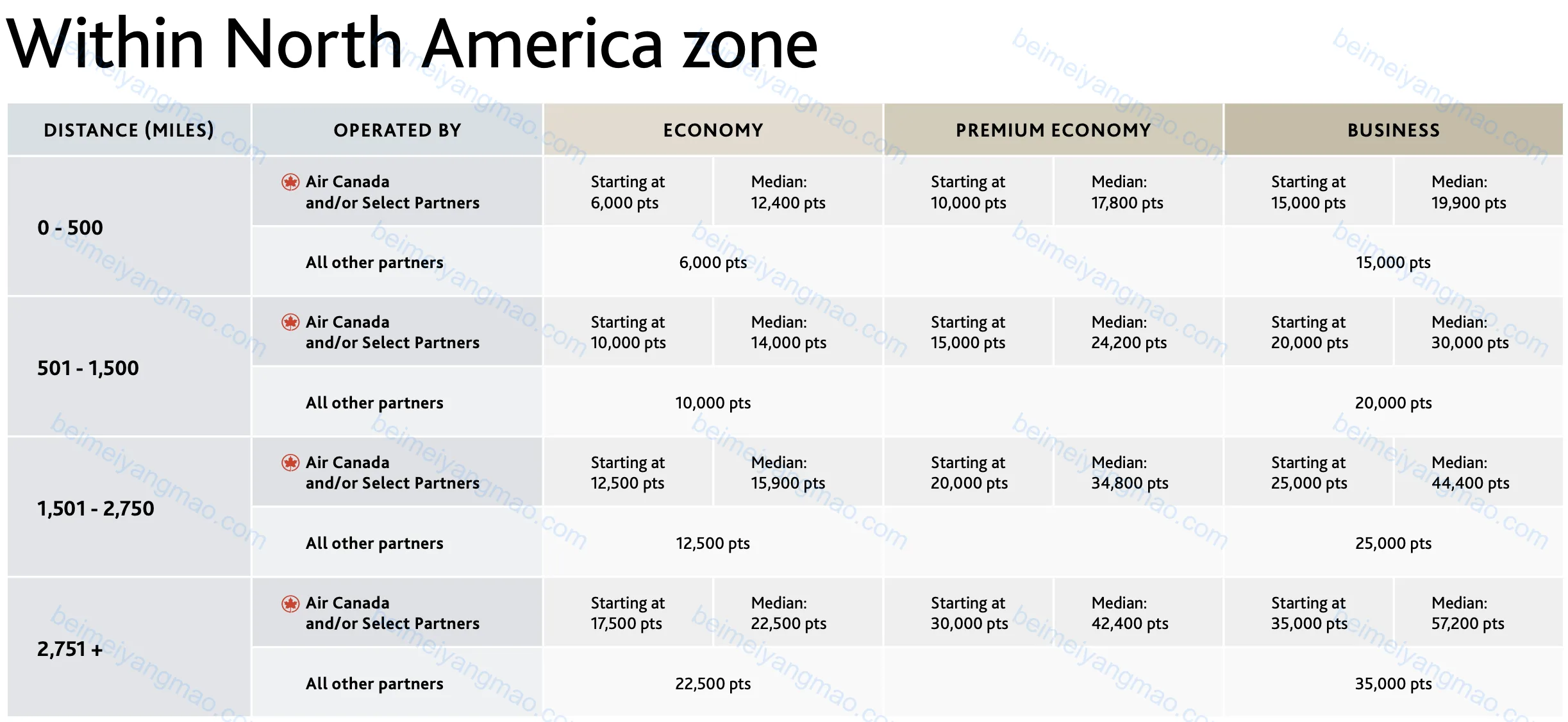
‘All other partners’ mileage requirements are unchanged.
North America–Atlantic: clear devaluation
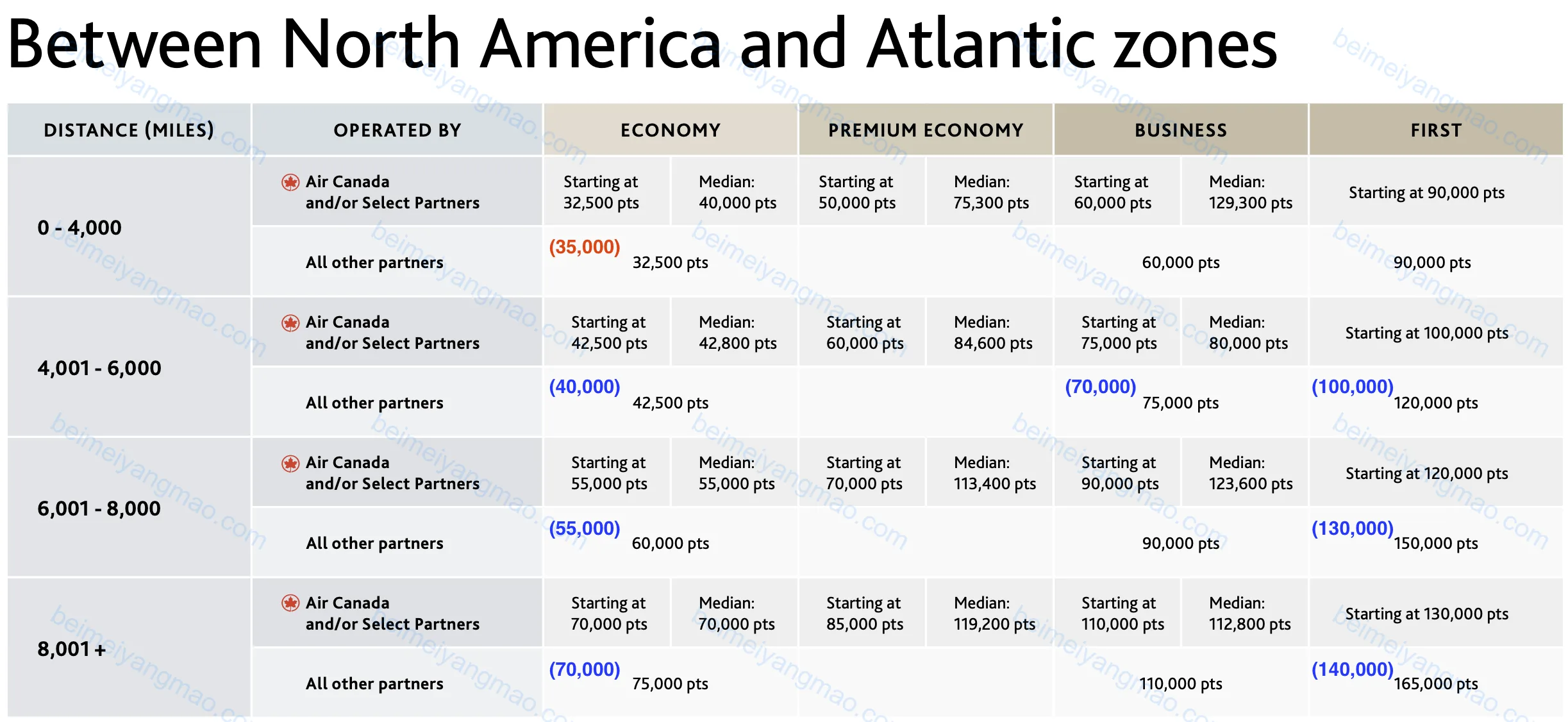
For business and first class, the devaluation ranges from about 7% to 20%. For example, West Coast to Europe on Lufthansa first class is a straight 20% worse.
North America–Pacific: business and premium economy jump
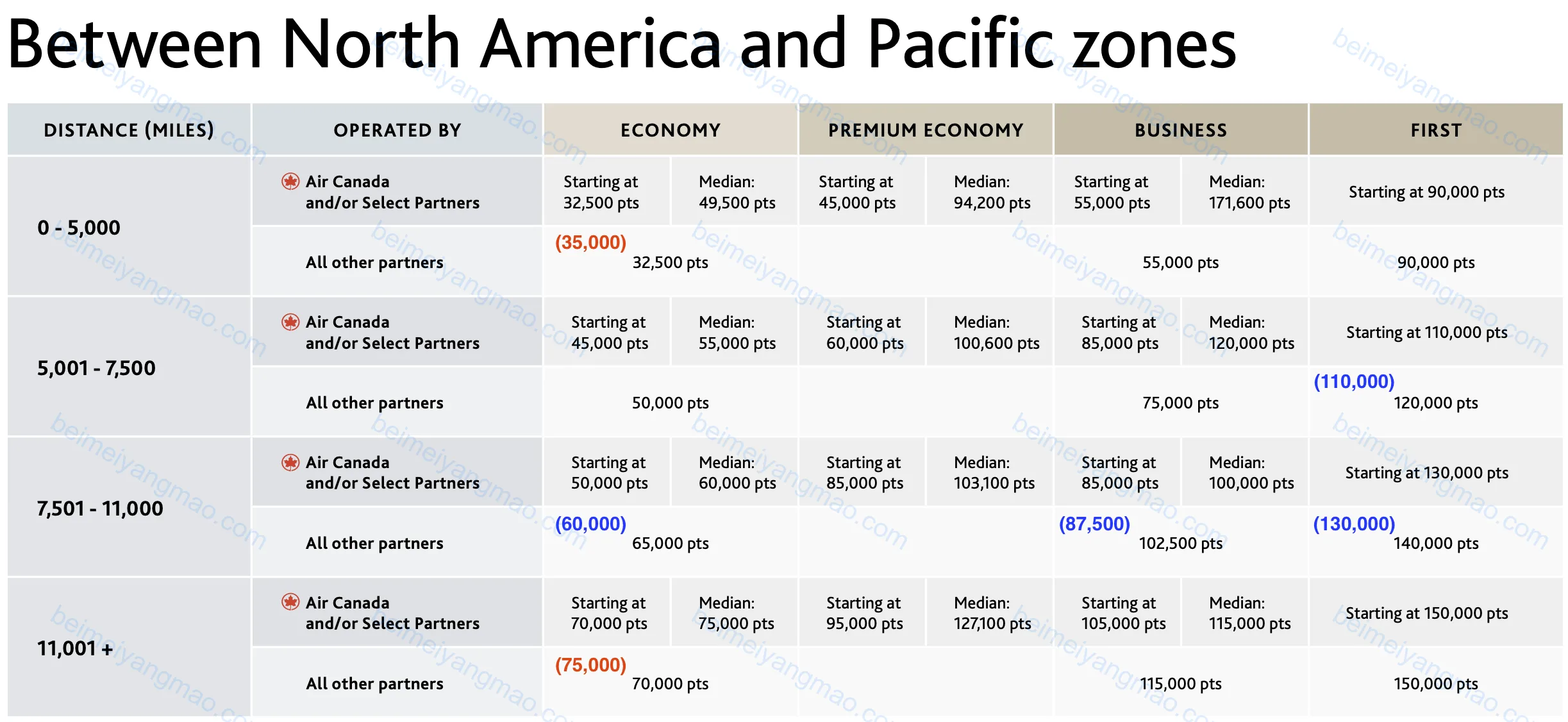
This is the chart that matters most for those of us in Canada and the US booking award tickets home.
Quite a few routes fall in the 7,501–11,000 mile band, where business class rises from 87.5k to 102.5k, including:
- Toronto–Taipei, and EVA Air flights from the eastern and central US to Taipei
- New York–Seoul connecting onward to southern China on Asiana
West Coast Canada and the US West Coast, whether connecting home via Japan, Korea, or Taiwan on partner airlines (EVA, ANA, Asiana, Air China), mostly fall in the 5,001–7,500 band. Business class there is unchanged at 75k, but first class rises from 110k to 120k. In that same band, Air Canada–operated business goes from 75k to 85k.
Air Canada’s own changes are not marked on the chart. The main ones are:
- 5,001–7,500 miles: AC business starting 75k → 85k
- 11,001+ miles: AC premium economy 80k → 95k
Within the Atlantic: long-haul business and first cost more
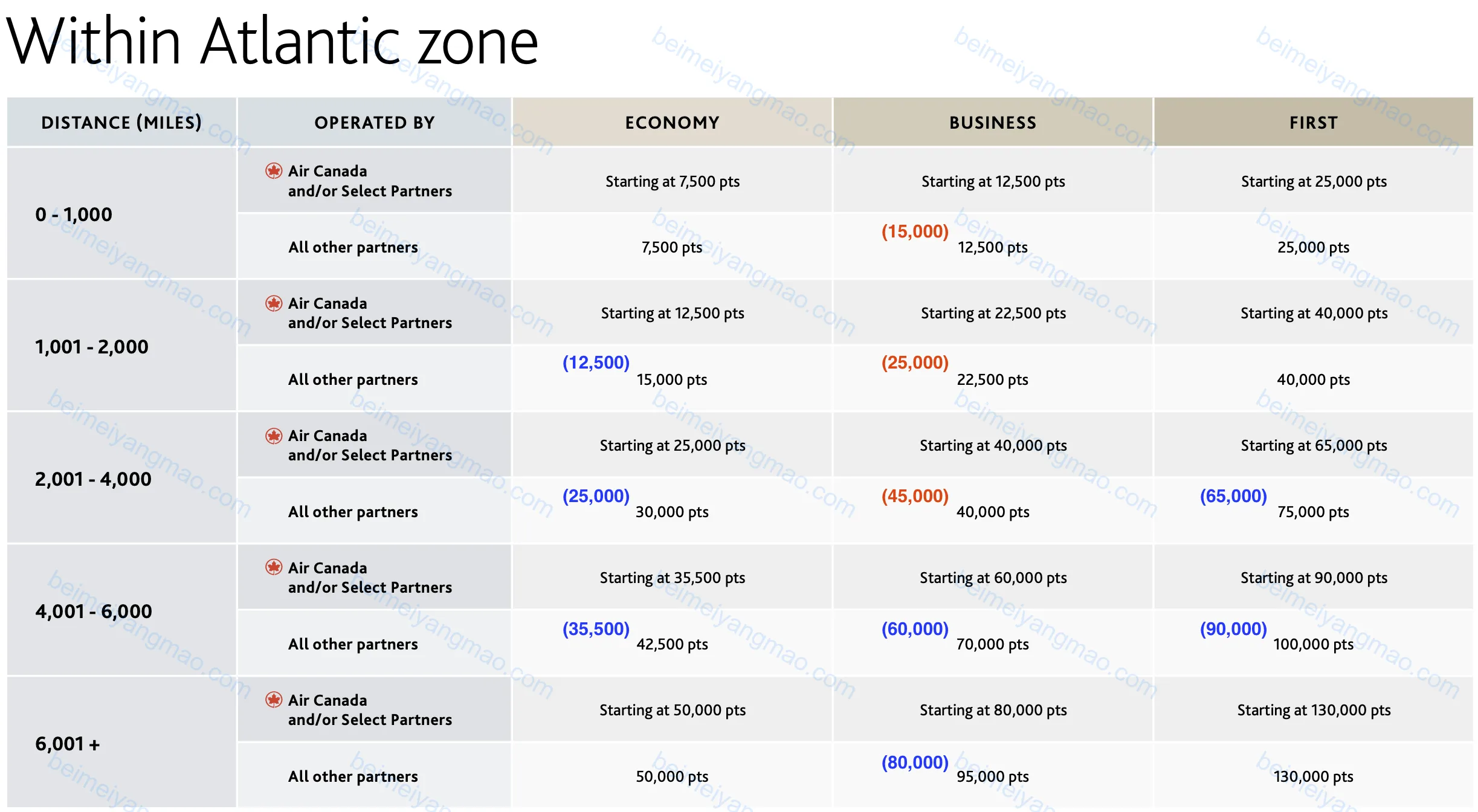
Short-haul business (0–4,000 miles) dips slightly; long-haul business (4,001+) and first class rise by roughly 10%.
Within the Pacific: mixed
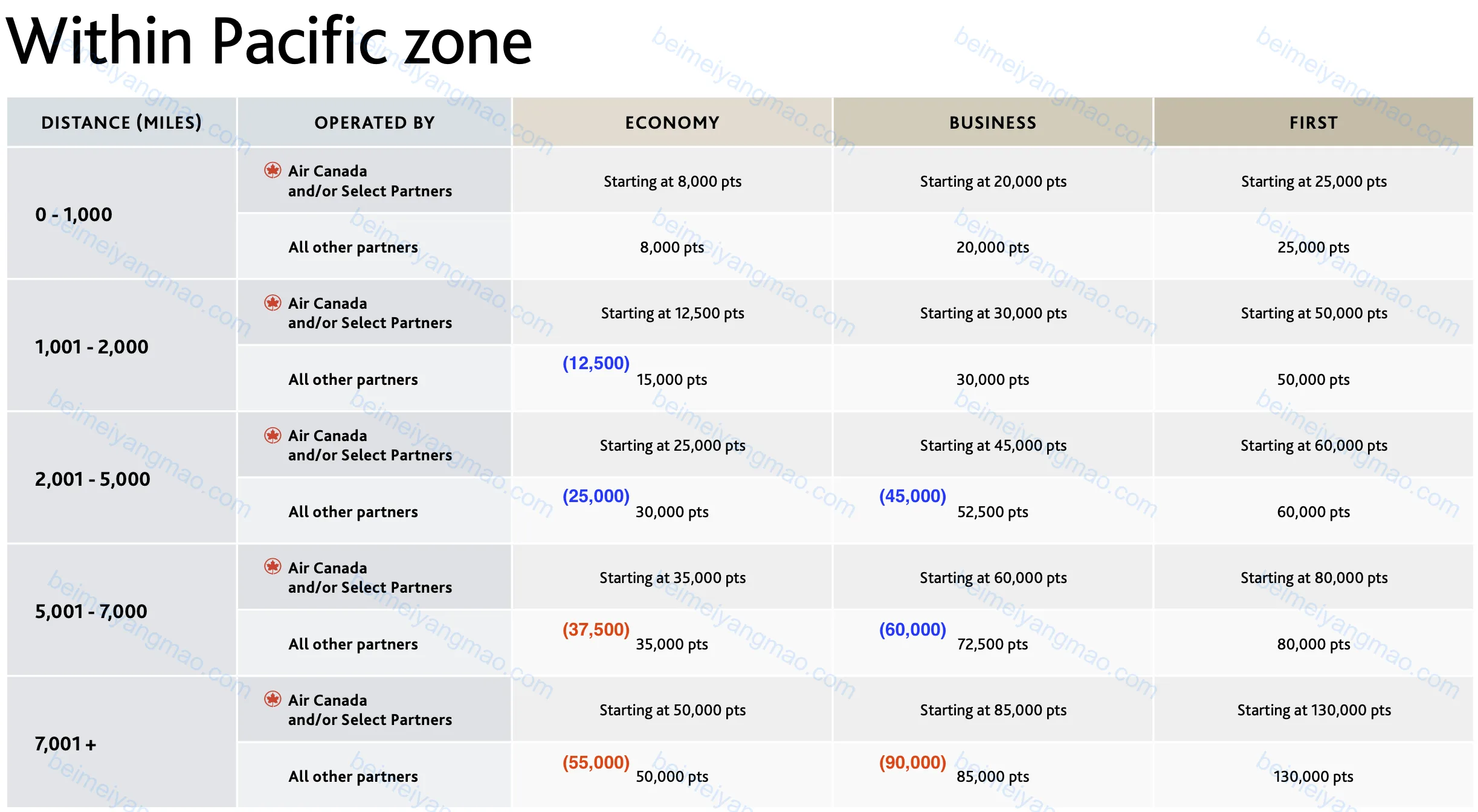
Within the Pacific, mid-haul business gets more expensive, but long-haul (7,001+) gets cheaper. First-class requirements stay the same.
Atlantic–Pacific: sharp devaluation
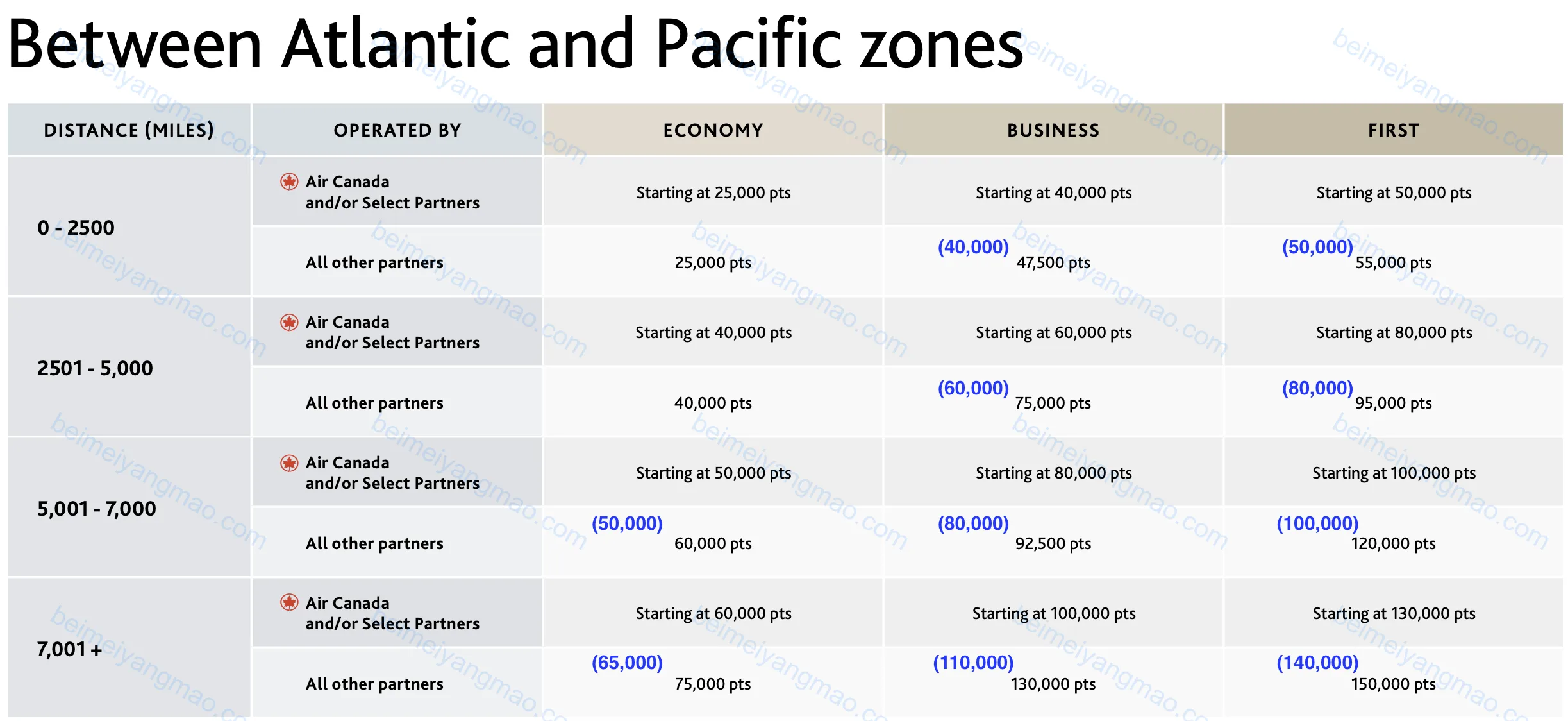
Besides the North America–Pacific hit, the Atlantic–Pacific chart is the other big devaluation this round — roughly 10%–20%. Every distance band’s business and first class got worse.
For example, East Asia to Europe often falls in the 5,001–7,000 band, where business rises from 80k to 92.5k and first from 100k to 120k.
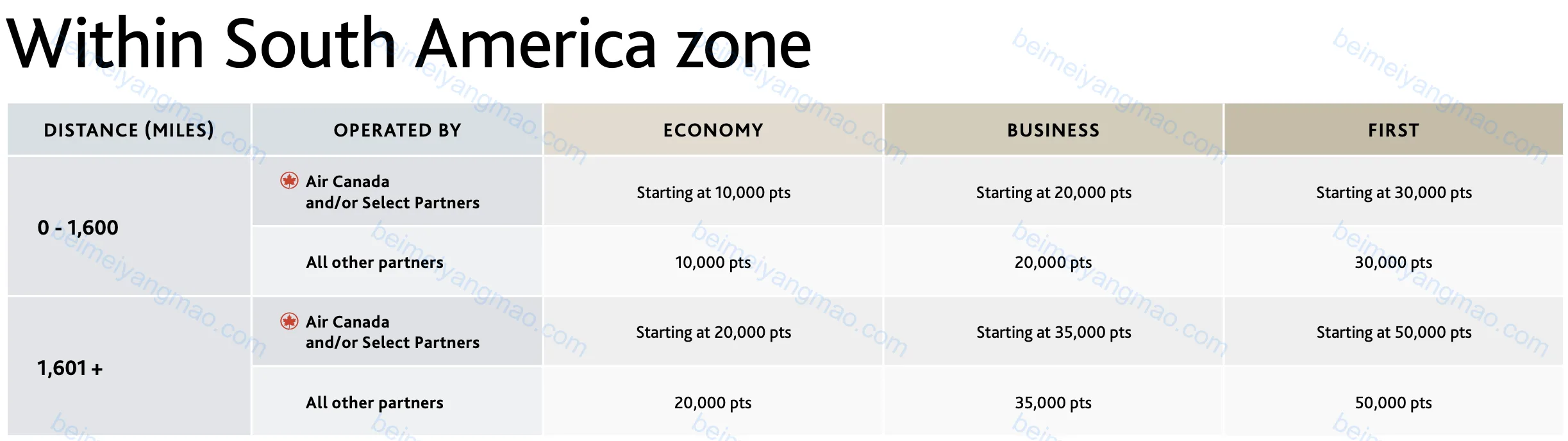
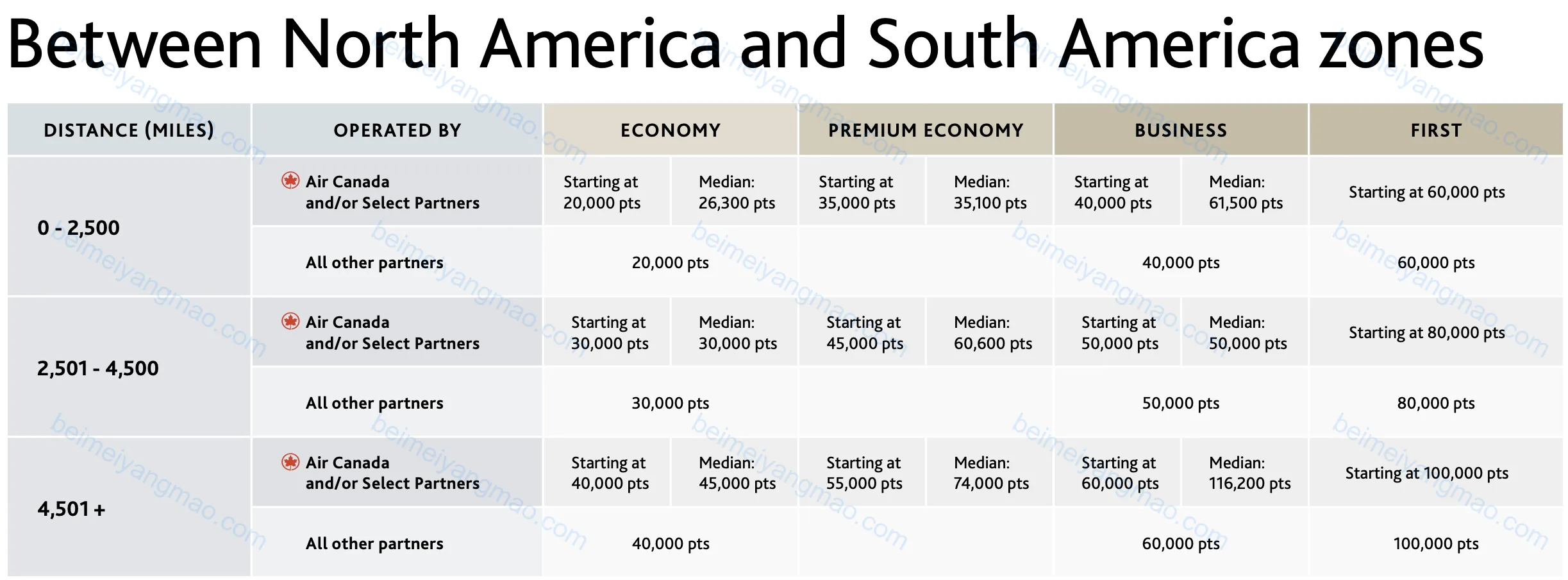
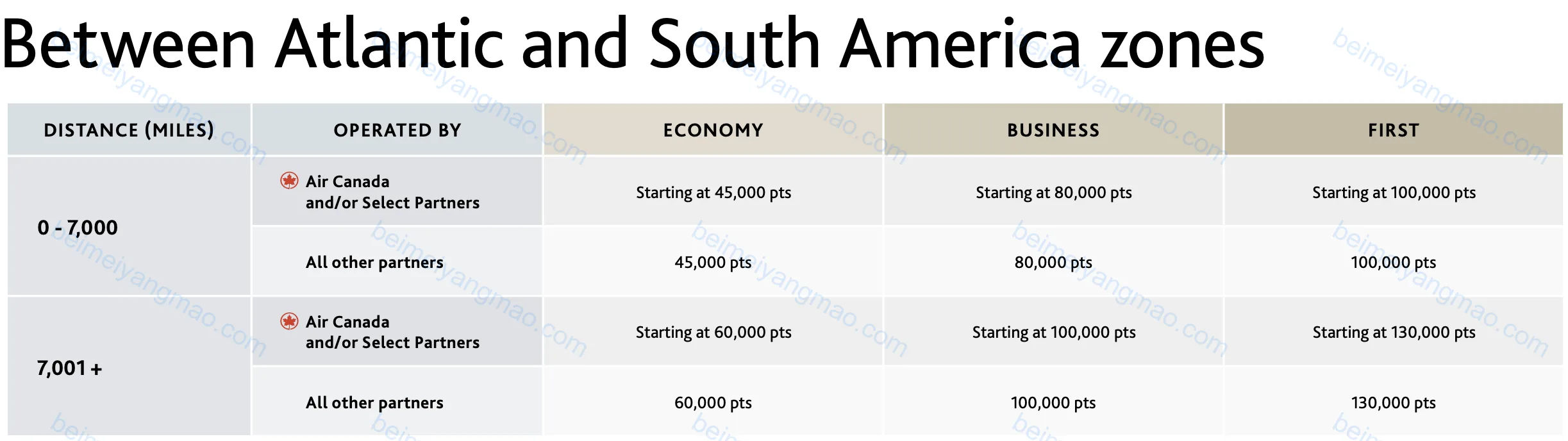
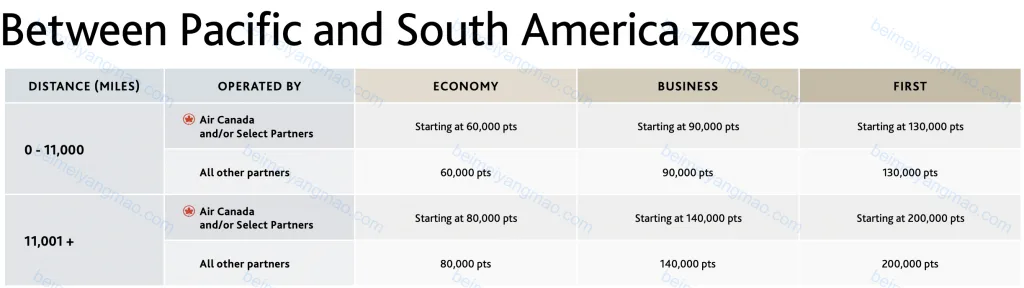
South America routes: all unchanged
Every South America-related chart is unchanged, including: within South America, North America–South America, Atlantic–South America, and Pacific–South America
Bottom line
Devaluation is the long-term trend for airline and hotel programs, but this Aeroplan cut is aggressive — especially on Pacific routes that matter to us. Friends in the east have fewer options; West Coast readers still have 55k and 75k business awards. Same advice as always: we don’t hoard points — if there is space, lock it in.


Comments
Comments from a new email are reviewed before they appear.