
⚠️ Buying a home and saving on tax are too important to overlook. Take a few minutes to understand the First Home Savings Account (FHSA).
The Canadian government launched this new home-buying benefit on April 1, 2023. Although the account had already been available for some time, most banks and credit unions had not formally opened FHSA account services yet.
This article summarizes what the FHSA does and how to use it strategically to reduce your tax bill.
Who Is Eligible
- At least 18 years old (the age of legal adulthood; in British Columbia, that means at least 19)
- Resident of Canada
- First-time home buyer (you have not owned a home during the four years before opening the account)
Opening an Account
Based on industry information, an FHSA can be opened through a bank or another financial institution.
As of August 2023, the only institution listed as offering an FHSA was:
- QuestTRADE (self-directed account) — click here to apply
⚠️ When applying, enter my referral code 805616143448050 in the offer code field. Both parties can receive a $50 reward.

- Fidelity — click here to apply

More institutions can open FHSAs now, including EQ and TD, which are mentioned in the historical updates at the end of this article. As of October 2026, nearly every Canadian bank supports FHSA accounts.
Contributions
After opening an account, you can contribute $8,000 each year. Contributions are tax-deductible, the lifetime contribution limit is $40,000, and investment growth is tax-free inside the account. Contribution room starts accumulating only after the account is opened, and unused room can carry forward to the next year.
Withdrawals
When you buy a home, you can withdraw the full amount, including growth, without paying tax on the withdrawal.
An FHSA can remain open for a maximum of 15 years. If you do not buy a home during that period, you must transfer the funds to an RRSP or withdraw them.
At age 71, you must close the account. You can transfer it to an RRIF or withdraw the funds; a withdrawal is fully taxable.
Comparing FHSA, RRSP, and TFSA Tax Treatment
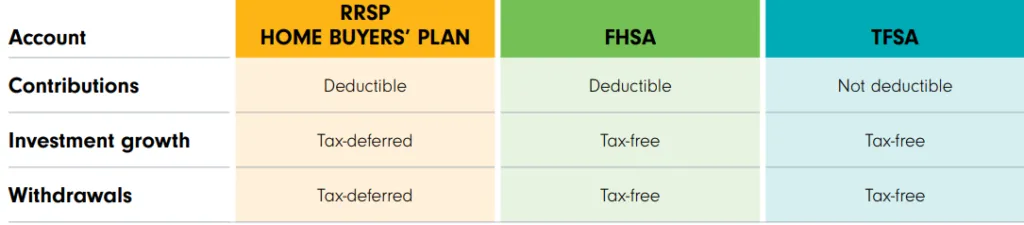
An FHSA qualifying home-purchase withdrawal can be used at the same time as a withdrawal through the RRSP Home Buyers’ Plan.
This is a valuable benefit for young people without a home. Suppose you start at age 18, contribute $8,000 each year, and have ten years of growth. Based on the Rule of 72, a steady 7.2% annual return could double the money in ten years. When buying a home, add the $35,000 available through the RRSP Home Buyers’ Plan. If two young people use both policies at the same time, that would mean a $230,000 down payment. What kind of home would you buy?
Important Considerations
Open the account as early as possible. It is especially helpful for young singles who have a longer timeline for contributing and waiting for growth.
If you live in a home purchased by your partner when you open the account, both of you lose your eligibility.
If you withdraw the funds for a purpose other than buying a home, the entire withdrawal is taxable.
Summary
The ideal situation is someone who does not currently own a home, has taxable income so contributions can reduce their tax bill, is not in a rush to buy and has enough time to wait for growth, and plans to buy a home in Canada so the full home-purchase withdrawal remains tax-free.
All information was taken on April 26, 2023, from the Canadian government’s First Home Savings Account (FHSA) – Canada.ca. Government rules may be refined as the program is implemented.
Historical Updates and Promotions
【August 30, 2023 update】 TD announced an account-opening bonus.
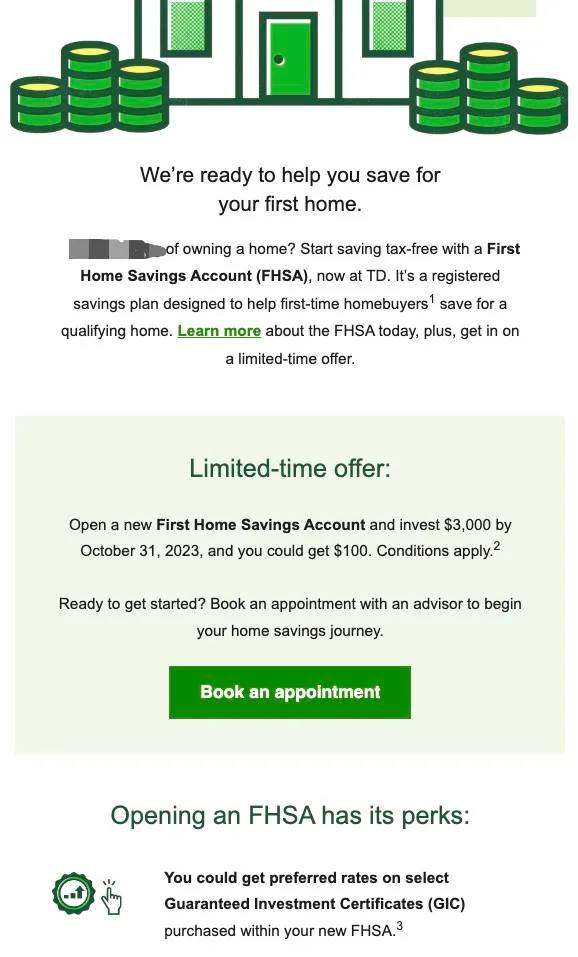
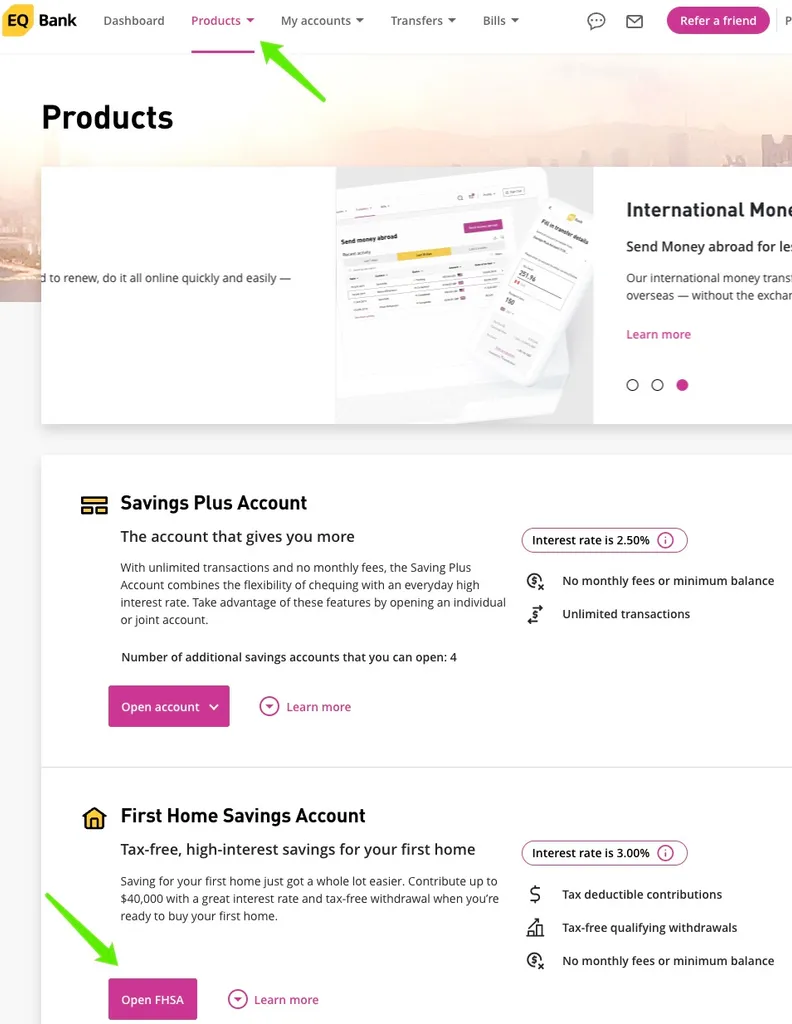
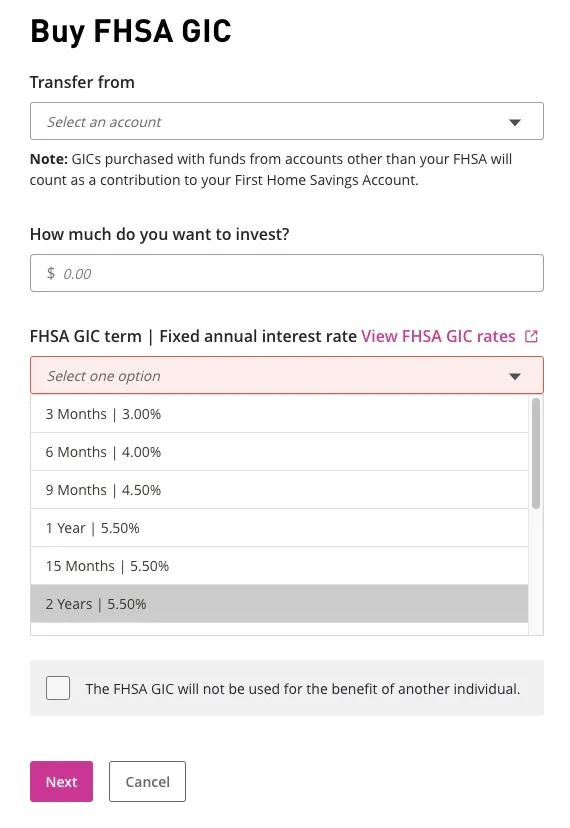
【July 27, 2023 update】 EQ became available. If you qualify, it was worth opening. At the time, EQ’s FHSA savings rate was 3.00%, and its GICs paid 5.50%. If you did not already have an EQ account, you could use my EQ account application link; deposit $100 within 30 days of opening and both parties would receive a $20 reward.
Comments
Comments from a new email are reviewed before they appear.